ADHD and Executive Function: Why It’s Hard to Focus, Start Tasks, and Stay Consistent
What is ADHD?
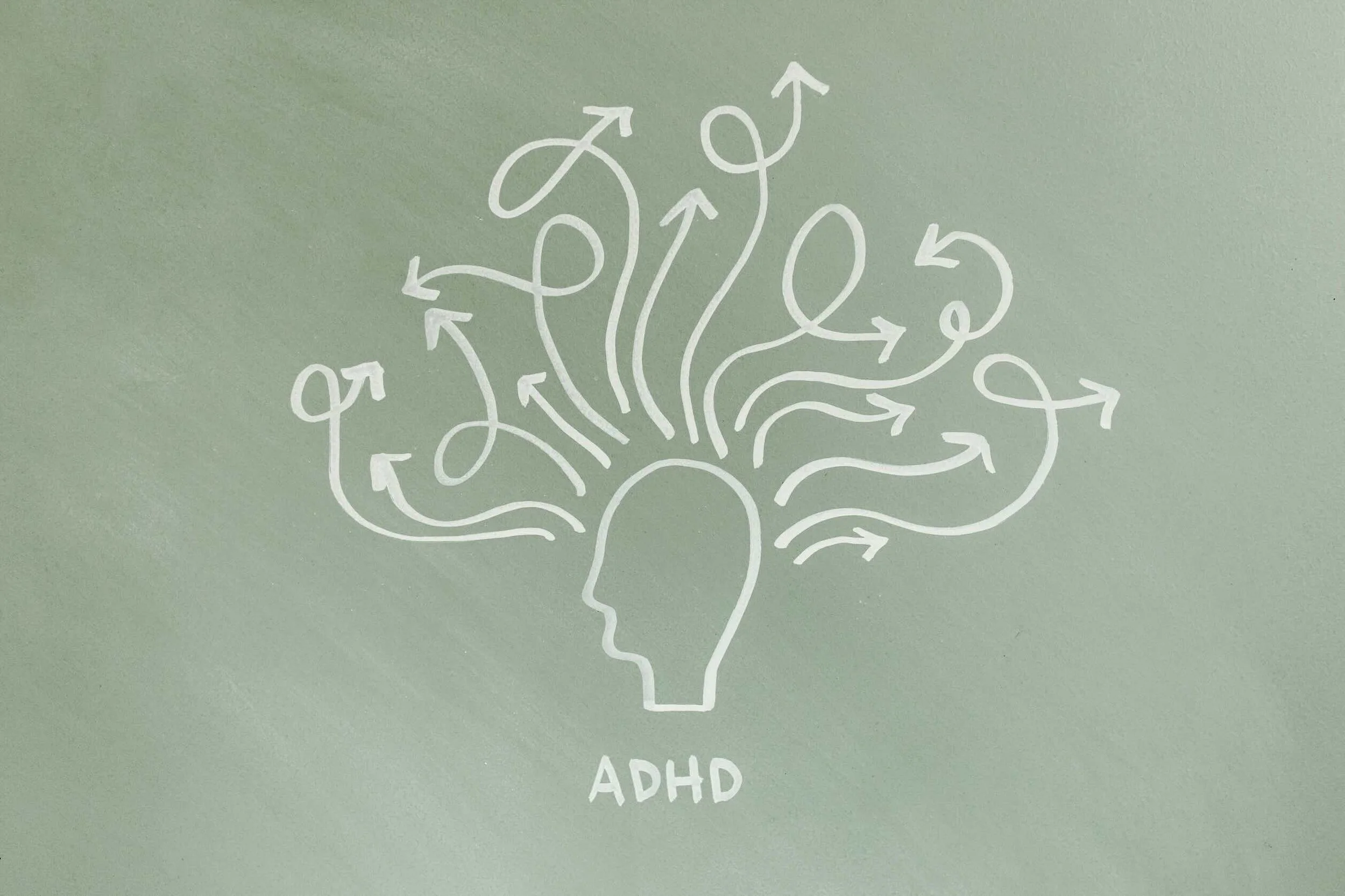
ADHD is often described as a problem with attention. But that explanation is incomplete—and often misleading.
At its core, ADHD is a neurodevelopmental condition that affects how the brain regulates attention, behavior, emotion, and effort over time. It’s not simply that attention is “low.” It’s that attention is inconsistently regulated, especially in situations that require sustained, goal-directed effort.
This is why someone with ADHD can:
Struggle to start a basic task
Lose focus halfway through something important
Forget information they just had
Yet also become deeply focused on something engaging
This pattern can feel confusing at first. But it begins to make more sense when we look at ADHD through the lens of executive function.
Executive functions are the brain’s management system. They help you:
Organize and prioritize
Start and sustain effort
Regulate emotions
Hold information in mind
Control impulses
In ADHD, these systems can be more variable and context-dependent—working well in some situations, and much less reliably in others.
There is also a growing body of research supporting the neurological basis of these differences. A 2023 study by Hoogman et al. in The Lancet Psychiatry found differences in several brain regions, including the amygdala, hippocampus, and nucleus accumbens—areas involved in emotion, memory, and motivation.
This doesn’t mean something is “broken.” It means the systems responsible for regulation, memory, and motivation are wired to operate differently, which shapes how attention, effort, and follow-through show up in everyday life.
One of the most practical ways to understand this is through executive function—specifically the six clusters described in Dr. Thomas E. Brown’s model.
1. Activation: Why Starting Tasks Feels So Difficult

One of the most misunderstood aspects of ADHD is task initiation.
People often assume that if something matters, you’ll just start it. But for many individuals with ADHD, starting is the hardest part.
Activation involves:
Organizing what needs to be done
Prioritizing tasks
Estimating time
Initiating action
When this system is under strain, tasks don’t feel like clear, actionable steps. They feel vague, heavy, and difficult to approach.
This can show up as:
Procrastination—even on important or urgent tasks
Overthinking where to begin
Feeling stuck despite knowing what needs to be done
Waiting for the “right moment” that never comes
Importantly, this isn’t about laziness or lack of discipline. It’s a breakdown in how the brain translates intention into action.
What helps:
Break tasks into extremely small, concrete steps
Not “write report” → but “open document,” “write first sentence”
Reduce decision friction by pre-planning steps ahead of time
Use external prompts (lists, reminders, visible cues)
Focus on starting for 5 minutes, not finishing the entire task
Action creates clarity. Waiting for clarity often delays action.
2. Focus: Why Attention Is Inconsistent

ADHD is less about not having attention and more about not being able to regulate it reliably.
Focus requires:
Filtering out distractions
Sustaining attention over time
Redirecting attention when it drifts
For individuals with ADHD, this system is highly context-dependent.
This is why:
You may struggle to focus on routine tasks
But can hyperfocus on something engaging or urgent
Small distractions can completely derail progress
Attention can fluctuate rapidly throughout the day
This inconsistency can be frustrating—not just for others, but internally.
What helps:
Reduce environmental noise (visual and auditory clutter)
Work in defined time blocks (e.g., 25–45 minutes)
Use a single-task focus (avoid switching between tasks)
Pair low-interest tasks with mild stimulation (music, movement)
Focus improves when the environment is structured to support it—not when you rely on effort alone.
3. Effort: Why Consistency Feels Unstable

Effort regulation is one of the least discussed—but most impactful—parts of ADHD.
It’s not just about whether you can do something. It’s about whether you can:
Stay engaged
Maintain energy
Continue effort over time
Many people with ADHD experience:
Strong bursts of productivity followed by drop-offs
Difficulty sustaining effort on long or repetitive tasks
Avoidance of tasks that don’t feel rewarding
Fluctuating energy that affects output
This isn’t a motivation problem in the traditional sense. It’s a difficulty with regulating effort and alertness.
What helps:
Use structured breaks to reset energy (not just when exhausted)
Build external accountability (deadlines, shared work sessions)
Add reward systems to increase engagement
Align tasks with your natural energy patterns when possible
Consistency comes from managing energy, not forcing constant output.
4. Emotion: Why Reactions Can Feel Intense

ADHD also affects how emotions are processed and regulated.
The same systems that support attention and impulse control also play a role in:
Managing frustration
Delaying reactions
Modulating emotional intensity
When these systems are less stable, emotions can feel:
Faster
Stronger
Harder to control in the moment
This may show up as:
Irritability or frustration over small disruptions
Emotional reactions that feel disproportionate
Difficulty recovering after an emotional spike
Feeling overwhelmed more easily
What helps:
Label emotions as they arise (this increases regulation)
Insert small pauses before responding
Use simple reset strategies (breathing, stepping away, shifting context)
Identify patterns in triggers over time
Emotional regulation improves when awareness increases—not when emotions are suppressed.
5. Memory: Why You Forget Things (Even the Important Stuff )
Working memory plays a central role in daily functioning.
It allows you to:
Hold information in mind
Use it while completing tasks
Track what you’re doing in real time
In ADHD, working memory is often less reliable. This doesn’t mean information isn’t understood—it means it’s harder to keep it active long enough to use effectively.
This can look like:
Forgetting tasks shortly after thinking of them
Losing track of what you were doing
Struggling with multi-step instructions
Needing repeated reminders
What helps:
Externalize everything (write it down immediately)
Use consistent systems (calendars, reminders, checklists)
Reduce reliance on memory by building routines
Keep important information visible
If something only exists in your head, it’s more likely to disappear.
6. Action: Why Impulse Control Is Difficult

Action regulation is about managing behavior in real time.
It includes:
Inhibiting impulses
Monitoring actions
Adjusting behavior based on context
In ADHD, there is often a shorter gap between impulse and action.
This can show up as:
Speaking without thinking
Interrupting or reacting quickly
Making decisions impulsively
Acting first and reflecting afterward
What helps:
Practice intentional pauses before acting
Use simple self-talk cues (“pause,” “wait,” “check”)
Reflect on patterns after the fact (build awareness)
Anticipate situations where impulsivity is more likely
Even a brief pause can significantly change outcomes.
A Holistic Approach: How It All Fits Together
These executive functions are not separate systems—they are deeply interconnected.
A challenge in one area often affects others:
Difficulty starting tasks impacts consistency
Poor focus increases mental load
Emotional spikes disrupt decision-making
Memory gaps affect follow-through
This is why ADHD can feel pervasive—it’s not one isolated issue. It’s a pattern across multiple systems.
The goal isn’t to “fix” one function. It’s to build support across all of them.
What tends to work best:
External structure over internal reliance
Small, repeatable systems instead of big changes
Lowering friction wherever possible
Building consistency gradually
ADHD is not a lack of effort.
It’s a difference in how effort, attention, and behavior are regulated.
And when you understand those patterns—and build systems around them—you can function far more effectively, with less friction and more consistency.
