Why New Year’s Resolutions Fade — and How to Reset Without Starting Over

If your New Year’s resolutions have started to fade, you’re not alone — and more importantly, you’re not failing.
This moment happens to almost everyone, yet it’s rarely talked about honestly. The first week of the year carries energy, optimism, and momentum. The second week brings reality. By the third, many people feel a quiet sense of disappointment: I should be further along by now.
That internal pressure is usually followed by self-criticism. And once that sets in, progress slows even more.
When people talk about “resolutions,” they’re usually naming a commitment that quickly turns into a set of goals they hope will stick.
When those goals lose momentum, it can feel like the resolution itself is fading — even though the underlying intention is often still there.
Here’s the reframe most people need to hear but rarely do:
If your goals are fading, it doesn’t mean you need to start over. It usually means your system needs a reset — not more pressure.
This article will walk through why resolutions fade from a psychological perspective, and how to reset calmly and practically so you can keep moving forward without burning energy or motivation.
Why Motivation Fades (and Why That’s Normal)
Motivation is often treated like a personal trait — something you either have or don’t. In reality, motivation is a temporary state, not a reliable fuel source.
From a psychological standpoint, motivation is closely tied to novelty. New plans feel exciting because they activate anticipation and possibility. But novelty fades quickly. Once the routine begins — once effort, friction, and real life re-enter — motivation naturally drops.
This isn’t a flaw in your character. It’s how the brain works.
The brain is designed to conserve energy. When something requires sustained effort without immediate reward, resistance increases. Pressure and self-criticism don’t solve this — they usually make it worse by increasing stress and narrowing focus.
When motivation fades, the brain isn’t sabotaging you. It’s asking for a more efficient, realistic approach.
The Five Psychological Traps That Cause Resolutions to Fade
Most resolutions don’t fail because people don’t care. They fade because they fall into predictable psychological traps.
1. Relying on Willpower
Willpower is a limited resource. It declines throughout the day as decisions pile up, stress accumulates, and energy drops.
Many resolutions assume a steady supply of willpower — especially during evenings, busy workdays, or emotionally loaded moments. When willpower runs out, people interpret this as laziness or lack of discipline.
In reality, the system was fragile.
When goals rely on willpower alone, they work only on good days — and collapse on hard ones.
2. All-or-Nothing Thinking
One missed day often turns into a story: I blew it.
This is a classic cognitive distortion. The brain prefers clean narratives — success or failure, on or off — even though real progress is rarely linear.
Perfectionism disguises itself as standards, but it often leads to avoidance. When people feel they’ve already failed, restarting feels pointless.
Momentum doesn’t die from one miss. It dies from the meaning we attach to that miss.
3. Emotional Avoidance
Many goals carry emotional weight: discomfort, boredom, vulnerability, or self-doubt. When starting a task triggers uncomfortable feelings, avoidance becomes a relief mechanism.
Psychologically, this is negative reinforcement. Avoiding the task reduces discomfort in the short term, teaching the brain that avoidance works.
Over time, the habit becomes less about the task itself and more about avoiding how it feels to engage with it.
4. Starting Too Big
Ambition is not the problem — activation energy is.
Large, vague, or open-ended goals create resistance because the brain doesn’t know where to start. The more effort or clarity a task seems to require, the more likely it is to be postponed.
Big starts feel inspiring on January 1st and overwhelming a week later.
Repeatable action beats impressive action every time.
5. No Plan for Resetting
Most people plan for perfect streaks, not interruptions.
Life inevitably disrupts routines — illness, work stress, travel, emotional dips. When there’s no plan for recovery, disruption turns into abandonment.
The most important habit skill isn’t consistency.
It’s restarting calmly.
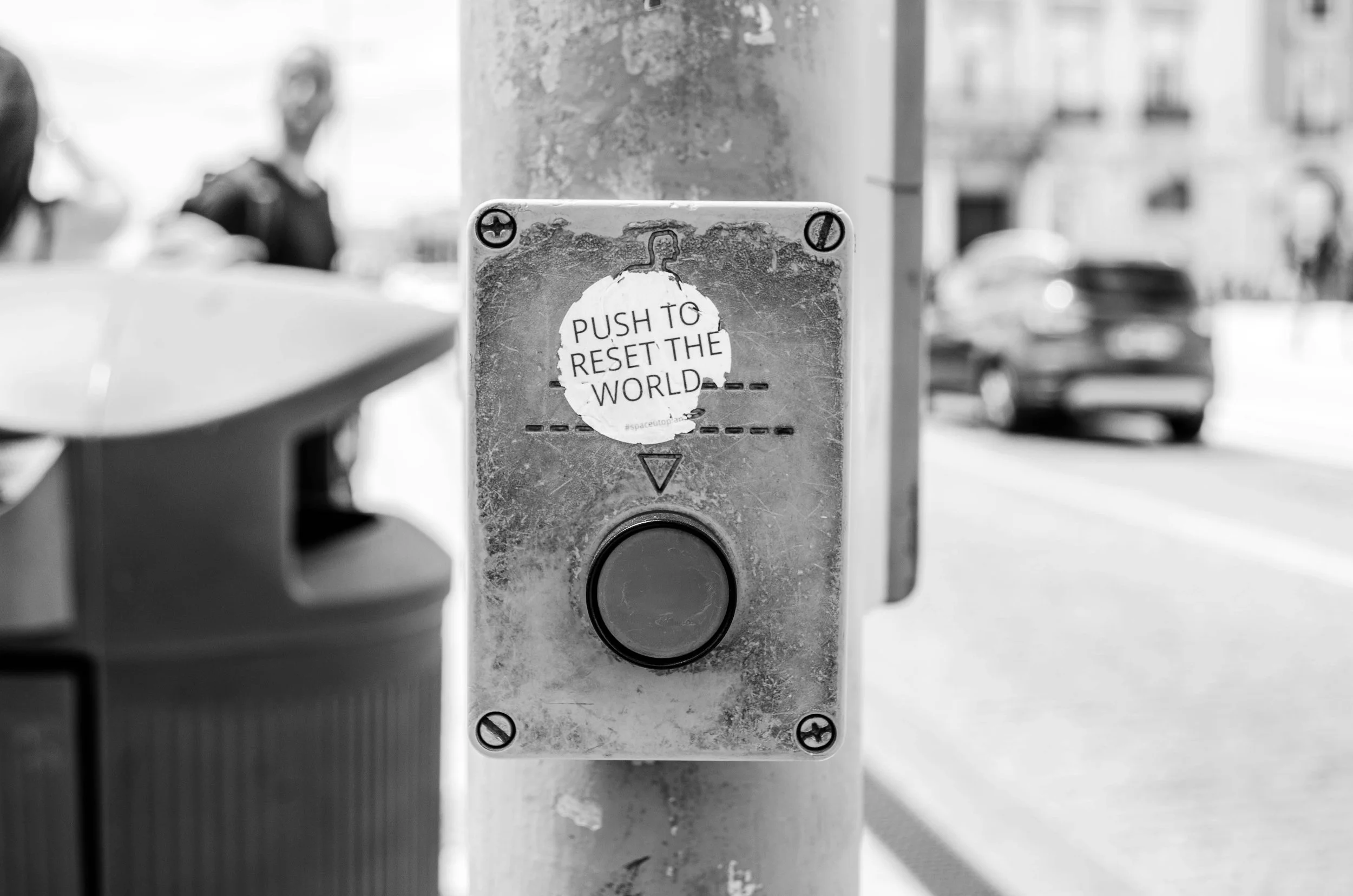
The Reset Reframe: You Don’t Need to Start Over
Here’s the shift that changes everything:
Resetting is not quitting. Resetting is regulation.
From a psychological perspective, self-compassion increases persistence, while shame decreases it. Pressure narrows thinking. Safety and calm expand it.
When people believe they’ve “ruined” their progress, they often overcorrect — restarting with even more intensity. That cycle leads to burnout, not results.
A reset isn’t erasing progress. It’s recalibrating to reality.
You’re not behind. You’re learning where friction exists.
The Reset Toolkit: How to Regain Momentum Without Pressure
This is where progress resumes — not through force, but through design. The goal isn’t to recommit harder — it’s to redesign the system carrying the commitment.
1. Reduce the Goal to Direction
Instead of asking “What should I accomplish?” ask:
“What direction deserves my energy right now?”
Choose one focus. Not ten. One.
Direction provides orientation without pressure. Outcomes can evolve later.
2. Design for Low-Energy Days
Most goals fail at predictable moments — evenings, stressful days, busy weeks.
Identify the moment where things usually fall apart, and design around that moment, not ideal conditions.
Ask:
When does this usually break down?
What makes this hard?
Build the system for real life, not perfect weeks.
3. Define the Minimum Viable Action
Decide in advance what “counts” on bad days.
This should be small enough that it feels almost too easy:
Five minutes
One paragraph
One walk around the block
Success is showing up, not finishing strong.
4. Create a Reset Rule
Pre-decide how you restart after a miss.
For example:
Miss once → continue as normal
Miss twice → simplify
Miss three times → reset calmly, no analysis
Removing negotiation prevents shame spirals and overthinking.
A Simple 15-Minute Reset Exercise
If your goals feel off right now, try this:
Name one goal that’s fading — without judgment
Identify where friction shows up
Reduce the goal to its smallest repeatable form
Write a simple reset rule
Restart today — gently
No declarations. No pressure. Just continuation.
Progress Is Built on Resets
The people who make lasting progress aren’t the ones who never fall off. They’re the ones who know how to reset quickly and calmly.
January — and any moment after — isn’t a verdict on your character. It’s feedback about your systems.
You don’t need a new year.
You need a better approach.
And if you’re willing to reset instead of restart, you’re already further along than you think.
👉 Let’s talk — if what you’ve read resonates, we can explore how coaching can support you.
