What Is a Growth Mindset? A Practical Guide to Progress, Motivation, and Success
Introduction
Most people dramatically underestimate what they can accomplish over time.
Not because they lack talent, intelligence, confidence, or potential.
But because they expect progress to happen faster than it usually does.
Whether you're trying to improve your fitness, build better habits, advance your career, learn a new skill, manage ADHD, recover from burnout, or develop greater confidence, the pattern is often the same.
You start with enthusiasm.
You take action.
You make an effort.
Then the results don't arrive as quickly as you expected.
A few weeks pass.
A few setbacks occur.
Progress feels slower than anticipated.
And that's often when self-doubt begins to appear.
Maybe I'm not good enough.
Maybe I'm not disciplined enough.
Maybe I'm just not cut out for this.
Many people assume the problem is a lack of ability.
In reality, the problem is often a misunderstanding of how growth actually works.
Most meaningful growth is gradual.
Most worthwhile achievements take longer than expected.
And many of the most important improvements in life are initially invisible.
This is where the concept of a growth mindset becomes valuable.
A growth mindset is more than simply believing in yourself.
It is a way of understanding learning, improvement, and personal development.
It encourages us to see our abilities as something that can be developed through learning, practice, feedback, and experience.
Perhaps more importantly, it helps us stay engaged long enough for progress to accumulate.
Because when small improvements are repeated consistently over time, they often produce results far greater than most people imagine.
What Is a Growth Mindset?
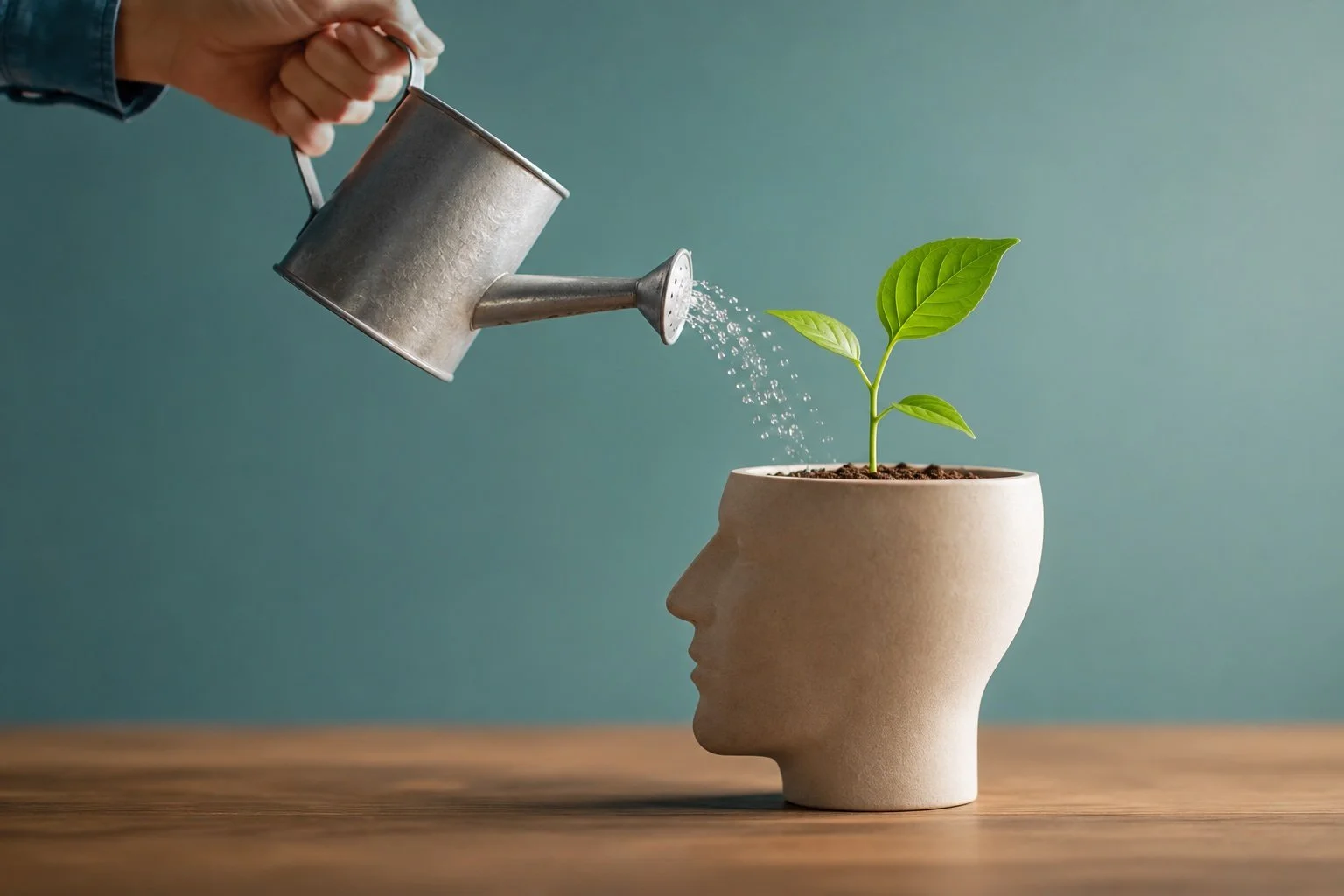
The term "growth mindset" was popularized by psychologist Carol Dweck through her research on learning, achievement, and motivation.
At its core, a growth mindset is the belief that skills, abilities, and performance can improve through:
Learning
Practice
Feedback
Effort
Experience
It doesn't mean anyone can become anything.
It doesn't mean success is guaranteed.
And it doesn't mean effort alone solves every problem.
Rather, it recognizes that most people are capable of significantly more growth than they often assume.
A growth mindset views ability as something that can be developed rather than something that is permanently fixed.
The implications of this are profound.
If you believe your abilities are fixed, challenges become threatening.
Mistakes become evidence of inadequacy.
Slow progress feels discouraging.
Failure becomes personal.
If you believe your abilities can improve, challenges become opportunities to learn.
Mistakes become feedback.
Slow progress becomes part of the process.
Failure becomes information rather than identity.
This simple shift can dramatically change how people respond to setbacks, obstacles, and difficult goals.
Where Did the Idea Come From?
Carol Dweck spent decades studying why some people persist through challenges while others give up.
One of her key discoveries was that the beliefs people hold about their abilities influence how they respond when things become difficult.
Some people tend to operate from what she called a fixed mindset.
Others tend to operate from a growth mindset.
These mindsets are not permanent personality traits.
Most of us move between them depending on the situation.
You may have a growth mindset in one area of life and a fixed mindset in another.
However, understanding the difference can help explain why some people remain motivated through setbacks while others become discouraged and quit.
Growth Mindset vs Fixed Mindset
Fixed Mindset
People operating from a fixed mindset often believe:
I'm either good at this or I'm not.
Success proves my worth.
Failure means I'm not capable.
Mistakes mean I'm failing.
If progress isn't visible quickly, it probably isn't working.
Because ability is viewed as fixed, challenges can feel threatening.
Anything that exposes weakness risks damaging self-confidence.
As a result, people may avoid challenges, fear failure, or become discouraged when progress is slower than expected.
Growth Mindset
People operating from a growth mindset tend to believe:
Skills can improve.
Progress takes time.
Small improvements compound.
Mistakes provide feedback.
Challenges help me grow.
Consistent effort matters more than immediate results.
Because ability is viewed as something that can be developed, setbacks become easier to tolerate.
Rather than asking, "What does this say about me?" they are more likely to ask, "What can I learn from this?"
Fixed Mindset vs Growth Mindset in Everyday Life
The difference between a fixed mindset and a growth mindset often comes down to how we interpret the same situation.
Learning a New Skill
Fixed Mindset
"I'm terrible at this."
Growth Mindset
"I'm still learning this."
Fitness
Fixed Mindset
"I've been exercising for three weeks and nothing has changed."
Growth Mindset
"The habits are taking root. The results will follow."
Career Development
Fixed Mindset
"I wasn't chosen, so I must not be good enough."
Growth Mindset
"What can I learn from this experience?"
Public Speaking
Fixed Mindset
"I was nervous. I'm just not a good speaker."
Growth Mindset
"Speaking is a skill. Every presentation is practice and I’ll get better."
ADHD
Fixed Mindset
"I'll never be organized."
Growth Mindset
"Organization is a skill I can strengthen with the right systems."
Self-Esteem
Fixed Mindset
"I made a mistake. I feel like a failure."
Growth Mindset
"I made a mistake. Mistakes are part of growth."
Burnout Recovery
Fixed Mindset
"I'm not recovering fast enough."
Growth Mindset
"Recovery takes time. Small improvements still count."
Building Habits
Fixed Mindset
"I missed a day. I've blown it."
Growth Mindset
"One missed day doesn't define the habit. I'll continue tomorrow."
Progress
Fixed Mindset
"If I can't see results, nothing is happening."
Growth Mindset
"Growth is often occurring before it becomes visible."
Comparison
Fixed Mindset
"They're so much further ahead than me."
Growth Mindset
"Their progress doesn't diminish my own. My job is to keep moving forward."
Notice that in every example, the situation is exactly the same.
The difference is not the event.
The difference is how the event is interpreted.
One interpretation tends to create discouragement and quitting.
The other tends to create learning, patience, and persistence.
The Hidden Cost of an Outcome-Focused Mindset

One of the biggest obstacles to growth is not a lack of ability.
It's becoming overly attached to outcomes.
Many people measure success almost exclusively through results:
Did I lose the weight?
Did I get the promotion?
Did I hit the revenue target?
Did I achieve the goal?
Did I succeed?
At first glance, this seems reasonable.
After all, goals and outcomes matter.
The problem is that outcomes are often delayed and only partially within our control.
You can exercise consistently and still not see immediate changes.
You can apply for jobs and still face rejection.
You can work hard on a project and still experience setbacks.
You can build a new habit and still have difficult days.
When our entire sense of progress depends on outcomes, motivation becomes fragile.
This often leads to:
Discouragement
Perfectionism
Self-criticism
Comparison
Frustration
Burnout
Loss of motivation
Many people abandon worthwhile goals long before meaningful progress has had time to emerge.
Not because they aren't growing.
Because they can't yet see the growth.
Why Impatience Leads to Demoralization
We live in a culture that promotes immediate results.
We are constantly exposed to stories of rapid success, dramatic transformations, and overnight breakthroughs.
As a result, many people develop unrealistic expectations about how quickly growth should occur.
The problem is that meaningful change rarely follows those timelines.
Most worthwhile goals require:
Repetition
Practice
Patience
Persistence
Yet when visible progress is slower than expected, people often conclude:
It's not working.
I'm not capable.
Maybe this isn't for me.
I should quit.
In reality, the issue is often not a lack of progress.
The issue is impatience.
One of the most valuable aspects of a growth mindset is that it encourages patience.
It helps people understand that growth is often happening long before it becomes obvious.
This understanding can dramatically reduce discouragement during difficult periods.
The Power of Incremental Progress

Perhaps the most important idea within a growth mindset is that meaningful change is often the result of small improvements repeated consistently over time.
Most people are looking for dramatic progress.
Life rarely works that way.
A single workout won't transform your fitness.
A single meditation won't eliminate stress.
A single coaching session won't completely change your mindset.
A single day of better habits won't change your life.
Yet these small actions are not insignificant.
They are the building blocks of growth.
The challenge is that progress is often difficult to see in the short term.
Day-to-day changes may appear tiny.
Week-to-week changes may feel disappointing.
But month-to-month and year-to-year changes can be extraordinary.
This is where many people quit too soon.
They mistake a lack of visible results for a lack of progress.
Growth mindset helps people stay engaged during this phase.
It reminds us that today's effort may not produce today's reward.
But repeated consistently, those efforts accumulate.
Why Small Improvements Compound
Imagine improving a skill by just a little each week.
At first, the improvement seems insignificant.
The difference is barely noticeable.
Then a few months pass.
You begin to feel more capable.
A year passes.
You look back and realize you're operating at a completely different level.
This pattern appears everywhere:
Fitness
Small workouts become improved strength, endurance, and health.
Career Development
Small skills become expertise and opportunity.
Confidence
Small acts of courage become greater self-belief.
ADHD Management
Small systems become improved organization, planning, and follow-through.
Emotional Regulation
Small moments of awareness become greater resilience and emotional stability.
Habits
Small daily actions become lasting change.
Many of life's most significant achievements are the result of compounding rather than dramatic transformation.
Growth mindset encourages us to trust this process.
Why Growth Mindset Matters
Growth mindset shifts attention from:
Outcome
to
Process
Instead of asking:
Did I achieve the goal?
You begin asking:
Am I learning?
Am I improving?
Am I practicing?
Am I showing up consistently?
Am I moving in the right direction?
This shift changes everything.
Because when your attention moves toward the process, you no longer need immediate results in order to stay motivated.
You can find satisfaction in growth itself.
And that often makes long-term success far more likely.
6 Practical Ways to Develop a Growth Mindset
1. Trust Incremental Progress
Most growth is not dramatic.
It is gradual.
Look for:
Small improvements
Better decisions
Increased consistency
Slightly improved performance
Focus on trends rather than individual days.
Direction matters more than speed.
Ask yourself:
What am I doing better than I was six months ago?
2. Measure Success by Showing Up
Many worthwhile goals involve delayed rewards.
The person who shows up consistently often outperforms the person who relies on motivation alone.
Focus on:
Consistency over intensity
Action over intention
Process over immediate results
Ask yourself:
Did I engage with the process today?
3. Separate Mistakes From Identity
Many people unconsciously turn mistakes into personal judgments.
A missed deadline becomes:
I'm unreliable.
A failed attempt becomes:
I'm not capable.
Growth mindset recognizes a simple truth:
A mistake is something you did.
It is not who you are.
The ability to separate performance from identity creates greater resilience and self-esteem.
4. Replace Judgment With Curiosity
Judgment tends to shut down learning.
Curiosity tends to expand it.
Instead of asking:
What's wrong with me?
Why can't I get this right?
Try asking:
What happened?
What got in the way?
What can I learn from this?
Growth often begins when judgment ends.
5. Compare Yourself to Your Past Self
Comparison is one of the fastest ways to destroy motivation.
Particularly when you compare your beginning to someone else's middle.
A healthier comparison is:
Am I making progress relative to where I used to be?
Growth mindset encourages people to focus on their own trajectory rather than someone else's highlight reel.
6. Learn to Enjoy the Process
Many people postpone satisfaction until they reach a goal.
The promotion
The relationship
The business milestone
The weight-loss target
The problem is that goals are occasional.
The process is daily.
Most of life is spent learning, practicing, improving, and growing.
A growth mindset helps you find meaning in those moments rather than constantly waiting for the next achievement.
This often creates greater enjoyment, greater patience, and greater long-term persistence.
Self Audit: How Growth-Oriented Is Your Thinking?

Rate each statement from 1–5.
I believe I can improve through practice and experience.
I can learn from mistakes without attacking myself.
I notice progress even when results are incomplete.
I stay engaged when progress is slower than expected.
I trust that small improvements can accumulate over time.
I compare myself primarily to my past self.
I can appreciate the process, not just the outcome.
I remain patient when growth is gradual.
Situations Where Growth Mindset Can Help
Building Habits
Growth mindset helps people stay committed long enough for habits to take root.
Career Development
Progress often occurs through small improvements in skills, experience, and relationships.
ADHD
Many executive functioning skills can improve through systems, structure, awareness, and practice.
Burnout Recovery
Recovery is rarely linear. Growth mindset helps people remain patient with the process.
Self-Esteem
Growth mindset separates self-worth from performance and mistakes.
Learning New Skills
Growth mindset reduces the fear of being a beginner and helps people tolerate the discomfort of learning.
Common Misunderstandings About Growth Mindset
Growth mindset is not:
Positive thinking
Blind optimism
Pretending failure doesn't hurt
Believing effort guarantees success
Ignoring limitations
Expecting constant improvement
Growth mindset is recognizing that improvement is possible, growth takes time, and setbacks are a normal part of the process.
It is a realistic and hopeful perspective, not a magical one.
Final Thought
A growth mindset is not about believing you can achieve anything.
It is about believing that growth remains possible.
It is the understanding that meaningful change rarely happens overnight.
Instead, it occurs through learning, effort, experience, and small improvements repeated consistently over time.
When you stop measuring yourself solely by outcomes and begin paying attention to progress, something important happens.
You become more patient.
You become more resilient.
You become less vulnerable to discouragement when results take longer than expected.
And perhaps most importantly, you stay in the game long enough for small improvements to compound into meaningful change.
Because the people who achieve the most are not always the most talented.
Often, they are simply the people who kept growing when others gave up too soon
👉 Let’s talk if what you’ve read resonates and you’re curious whether coaching could help, let’s explore it together.
